The Protocol against the Illicit Manufacturing of and Trafficking in Firearms, their Parts and Components and Ammunition (Firearms Protocol) is a leading international agreement addressing these illicit activities.
It is the only legally binding international instrument criminalizing these actions at the global level.
The Firearms Protocol guides global efforts in addressing the transnational nature of firearms trafficking and its links to organized crime from a criminal justice perspective.
It supports countries in controlling and regulating weapons and their flows, preventing diversion into illegal markets and investigating and prosecuting traffickers. It also promotes stronger international cooperation against illicit firearms.
The Protocol was adopted by resolution 55/255 of 31 May 2001 at the fifty-fifth session of the General Assembly of the United Nations, and it entered into force on 3 July 2005.
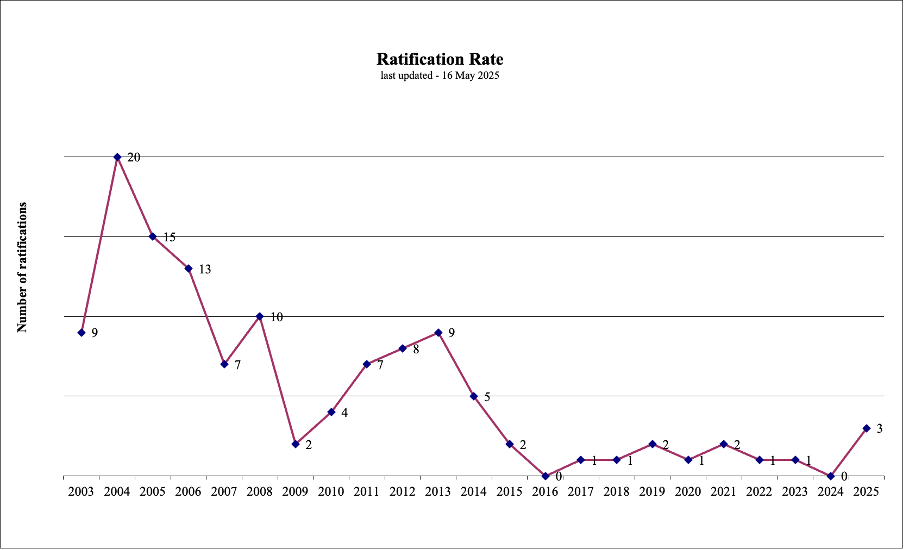
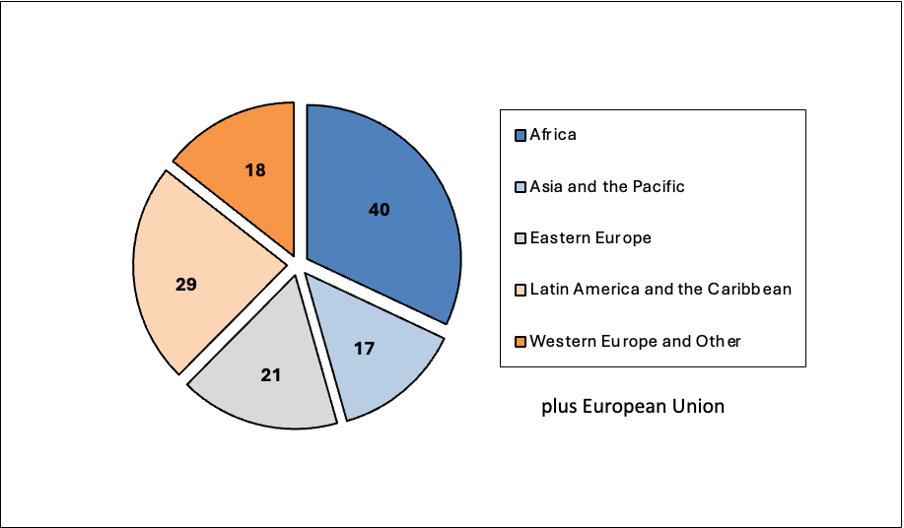
At present, 126 countries have joined the Protocol. By ratifying it, states commit to adopting and implementing measures to:
- Criminalize firearms trafficking in line with the Protocol’s requirements and definitions
- Adopt effective control and security measures, including the disposal of firearms, to prevent their theft and diversion into the black market
- Set up a system of government authorizations and licensing of weapons, for example, for manufacturing or transporting firearms
- Ensure proper marking, recordkeeping and tracing of firearms, as well as effective international cooperation for this purpose
The Firearms Protocol is one of the three Protocols that supplement the United Nations Convention against Transnational Organized Crime (Organized Crime Convention). The other two are:
- The Protocol to Prevent, Suppress and Punish Trafficking in Persons, Especially Women and Children
- The Protocol against the Smuggling of Migrants by Land, Sea and Air
The Convention provides for basic measures to counter transnational organized crime. The three Protocols provide for specific measures to combat three specific crimes: firearms trafficking, human trafficking and migrant smuggling. The Protocols are intended to be interpreted together with the Organized Crime Convention.
Countries-parties to the Firearms Protocol undertake to adopt and implement the strongest possible legislation – consistent with their national legal systems – to prevent, investigate and prosecute offences related to illicit firearms.
Specific measures include:
- Confiscating, seizing and destroying illicitly manufactured or trafficked firearms
- Keeping records on firearms for at least ten years to identify and trace them
- Issuing licenses for the import and export of firearms and authorizing transits
- Marking firearms to identify the manufacturer, the country and the year of import.
Countries also commit to cooperate extensively at the bilateral, regional and international levels, including by providing training and technical assistance to other states.
Finally, Parties to the Protocol undertake to exchange relevant case-specific information on authorized producers, dealers, importers, exporters and carriers of firearms. They commit to sharing information on organized criminal groups involved in the illicit manufacture and trafficking of weapons.
Pursuant to Article 32 of the Organized Crime Convention, a Conference of the Parties (COP) to the Convention was established to improve the capacity of countries to combat transnational organized crime and to promote and review the implementation of the Convention and its Protocols. The COP meets every two years.
Pursuant to resolution 5/4 of the COP at its fifth session, an open-ended intergovernmental Working Group on Firearms was established to advise and assist the COP in implementing its mandate regarding the Firearms Protocol.
The Working Group facilitates the implementation of the Protocol through the exchange of experience and practices among national and international experts.
This includes identifying weaknesses, gaps and challenges, as well as successful practices, priorities and relevant topics in the fight against firearms trafficking.
The Working Group is also tasked with making recommendations to the COP on how countries can better implement the provisions of the Firearms Protocol, on the activities that the UN Secretariat should perform and on the development of technical assistance tools related to the implementation of the Protocol.
Article 18 (1) and (2) of the Firearms Protocol reads as follows:
"1. This Protocol shall enter into force on the ninetieth day after the date of deposit of the fortieth instrument of ratification, acceptance, approval or accession, except that it shall not enter into force before the entry into force of the Convention. For the purpose of this paragraph, any instrument deposited by a regional economic integration organization shall not be counted as additional to those deposited by member States of such organization.
2. For each State or regional economic integration organization ratifying, accepting, approving or acceding to this Protocol after the deposit of the fortieth instrument of such action, this Protocol shall enter into force on the thirtieth day after the date of deposit by such State or organization of the relevant instrument or on the date this Protocol enters into force pursuant to paragraph 1 of this article, whichever is the later."
At the beginning of the UNODC Global Firearms Programme, 84 countries were Parties to the Protocol.
To date, the number has risen to 126 – an increase of 42 countries during the implementation period.