Regional Programme Framework


The purpose of the Regional Programme is to support the efforts of the Republic of Albania, Bosnia and Herzegovina, the Republic of Croatia, Montenegro, the Republic of Serbia, the Former Yugoslav Republic of Macedonia and Kosovo under UNSCR 1244 to jointly respond in a coordinated way to evolving human security threats and strengthen the rule of law.

In particular, the Regional Programme will provide technical assistance by equipping respective agencies and national authorities to tackle serious and organised crime and illicit trafficking in drugs and other contrabands, improve their justice systems and fight corruption, as well as prevent and treat drug abuse and the spread of HIV/AIDS. A special emphasis will be put on improving regional cooperation and establishing strategic partnerships with relevant international institutions, in particular in light of the foreseen accession into the European Union.

The framework of the Regional Programme is based on three priority Sub-programmes for UNODC interventions as identified at an Expert Meeting of the representatives from all six countries held in Vienna on 22-23 May 2008.


Structure of the Regional Programme

The Regional Programme is based on three thematic Sub-programmes

1. Organized Crime and Terrorism

2. Justice and Integrity

3. Drug Prevention and Treatment, HIV Treatment and Care


The thematic Sub-programmes explained below refer to the mutual needs and regional cooperation of the participating countries/territories.

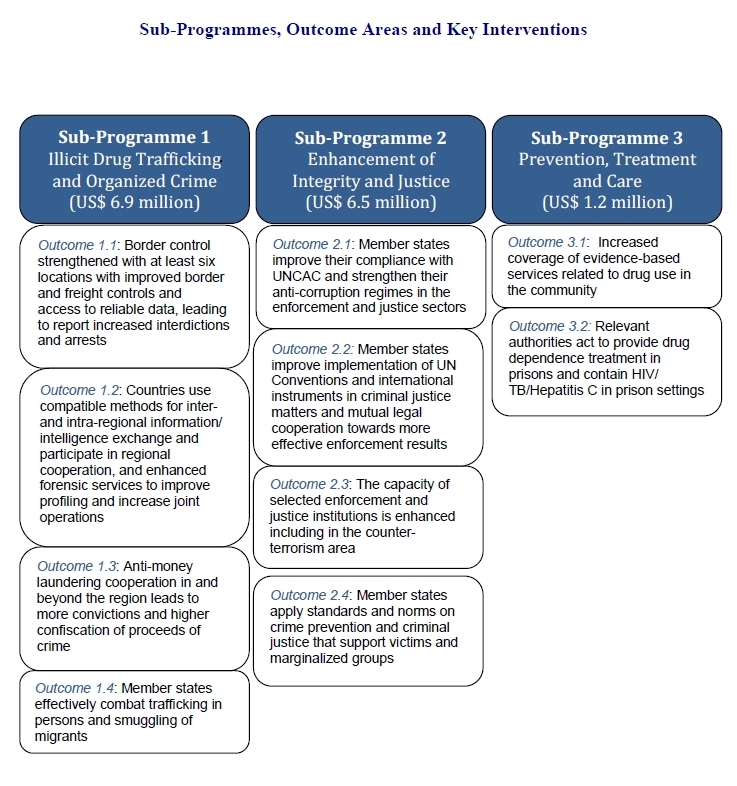
Figure 1:  The Regional Programme Structure


The following three Sub-programmes constitute the UNODC strategic outlook for the South Eastern European (SEE) region:


1. Organized Crime and Terrorism

1.1 Legislative assistance and capacity building

1.2 Border control

1.3 Specialized investigative and analytical techniques

1.4 Money laundering, financing of terrorism and asset forfeiture

1.5 Witness and victim protection

1.6 Forensics

1.7 Terrorism prevention

Activities in this Sub-programme will include assistance to the seven countries/territories of the region to strengthen their capacities for responding more effectively to organized crime, reducing the smuggling of migrants, drug trafficking, human trafficking and countering money laundering. It will assist the seven countries/territories in obtaining similar levels of capabilities, facilitate cooperation and establish mechanisms for collaboration and networking in the region. The Programme will also support the seven countries/territories in their efforts to improve border management and border control by applying modern, specialized investigative techniques, as well as common approaches and joint operations which would advance the regional cooperation in combating drug trafficking, human trafficking and the smuggling of migrants. The Programme will also increase the capacities of the forensic laboratories in the region in order to reach the internationally accepted standards

Activities under this Sub-programme will also support the seven countries/territories in establishing regional witness protection programmes and making the legal frameworks compatible with international standards and best practices. Regional and international cooperation for the relocation and identification of victims and witnesses will also be strengthened. Networks for information exchange regarding the identification, referral, protection, repatriation and reintegration of the victims of human trafficking and smuggling of migrants will be established at regional level with the participation of destination countries/territories. Other activities under this Sub-programme will include technical and legislative assistance to the countries/territories in the process of implementing the conventions on suppression of terrorism. It will also support the related underlining activities in the area of forensics by harmonizing capabilities of laboratories in the region, improving quality of forensic science services - from the crime scene to the courtroom - and use of forensic data and information, and strengthening collaboration between laboratories, law enforcement and justice institutions.


2. Justice and Integrity

2.1 Anti-Corruption and Judicial Integrity

2.2 Linking Law Enforcement and Justice Institutions

2.3 Prison Reform

2.4 Juvenile Justice

Activities in this Sub-programme will assist the seven countries/territories to effectively combatcorruption and to create more effective and coordinated responses to corruption and transnational crime. The Sub-programme also focuses on supporting prison reform and encourages legislative reforms in the area of juvenile justice. The activities will include enhancing the respect of human rights of children in conflict with the law in the region, as well as other vulnerable prisoner groups such as women and disabled people. Overall, UNODC is providing assistance in strengthening the rule of law and the judicial integrity to advance the standards of professional conduct for criminal justice personnel as well as to improve transparency and enhance citizen's access to justice.


3. Drug Prevention and Treatment, HIV Treatment and Care

3.1 Drug prevention programmes

3.2 Drug treatment and reintegration programmes

3.3 HIV/AIDS prevention, treatment and care

The activities in this Sub-programme will assist the seven countries/territories in developing mutual coordination to promote effective programmes for prevention of drug use and dependence, implementing international standards in the area of drug treatment, and promoting HIV/AIDS prevention and treatment. Activities in this Sub-programme are targeted to prevent drug use and dependence, improve regional capacity to respond to the needs of people suffering from drug dependence and reduce transmission of IV/AIDS through drug use, trafficking and in prison settings, as per UNODC's mandate as one of the UNAIDS Co-Sponsors, through targeted prevention, treatment and care activities.


UNODC estimates that a total of US$ 27.721 million will be needed over the three year period, to achieve the outcomes listed under each of the three sub-programmes. This includes the financial resource allocations that UNODC experts have to dedicate from previously mobilised funds, as well as priority activities that have already been accomplished in 2009, as well as additional resources from other external partnerships.


Ongoing Projects