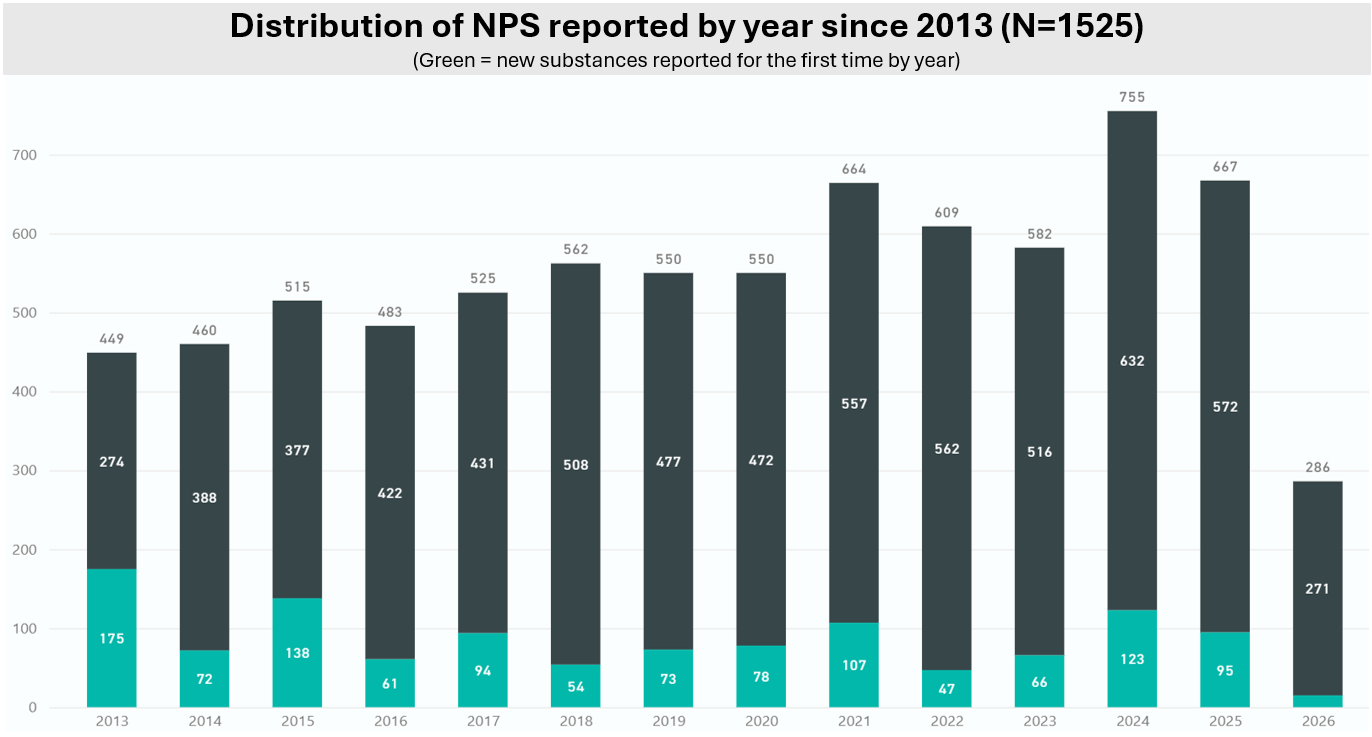
As of today, a total of 1,525 individual substances has been reported to the UNODC EWA by 155 countries and territories worldwide. During the 2025/6 period, 698 substances were reported, including 110 new substances reported for the first time by 33 countries. Among all substances reported during this period, stimulants (28%) and synthetic cannabinoids (22%) accounted for half of all reports. Among the new substances reported for the first time, synthetic cannabinoids (24%) and synthetic opioids (23%) currently represent the largest groups. While data for 2025 and 2026 remain preliminary, reports submitted to the UNODC EWA already highlight the continuing diversification of the NPS market, with new substances emerging across multiple structural and effect groups.
![]()
 Emerging substances with intercontinental spread
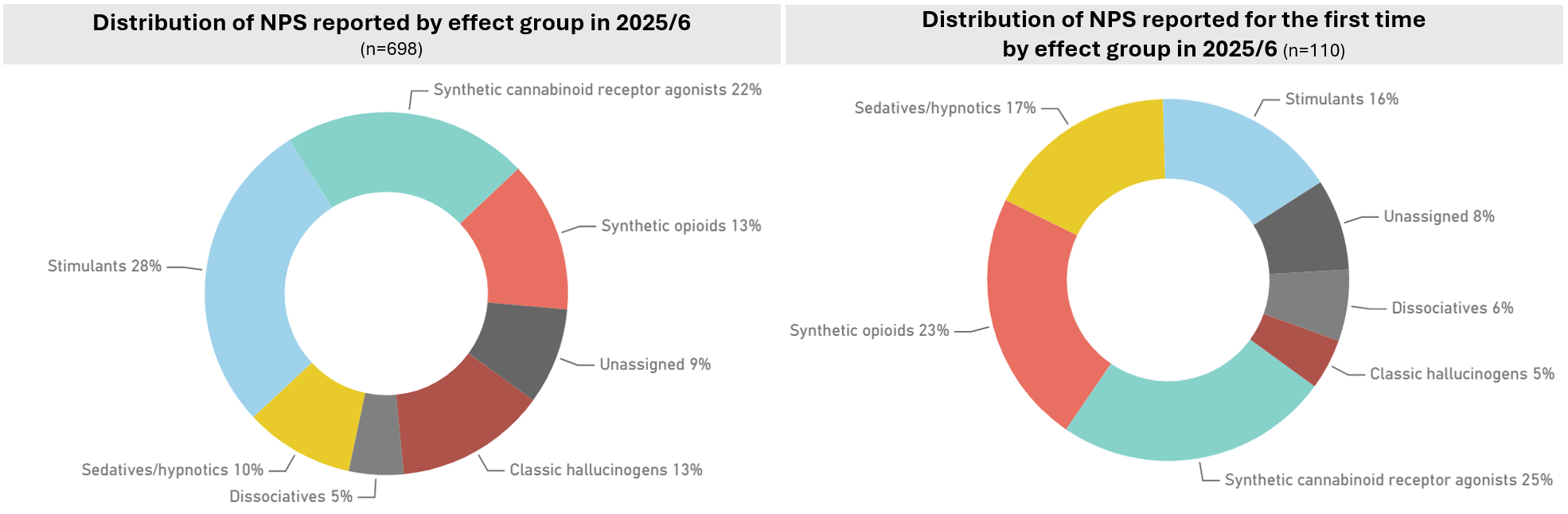
 Among the substances first reported during the 2025/6 period, several have shown notable rapid international spread. Synthetic opioids, particularly nitazenes and orphine analogues, accounted for the largest share of substances reported across multiple continents, underscoring the global reach of emerging opioids threats.
Protodesnitazene, a synthetic opioid, was reported by 9 countries across five continents (Oceania, South America, North America, Asia and Europe).
Etodezitramide, another synthetic opioid, was reported by 5 countries in North America and Europe, while
MADMB-4en-PINACA, a synthetic cannabinoid, was reported by 5 countries across Europe and Africa.
Other newly reported substances detected in two or more continents (Table) included
ethylflualprazolam, a benzodiazepine, reported by 4 countries across Oceania, North America, and Europe and
5-chloro desmethylchlorphine, a synthetic opioid, reported by 3 countries in North America and Europe. The rapid geographic spread of these substances demonstrates how quickly newly emerging compounds can appear in multiple regions and highlights the need for drug analysis laboratories and national authorities to maintain vigilance and analytical readiness for their detection and identification.
 Accessing global early warning data
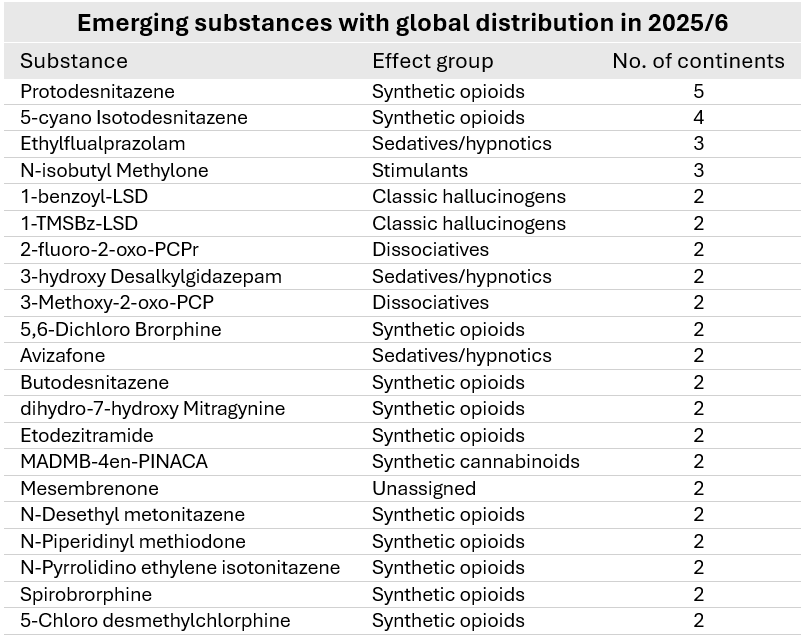
 The UNODC EWA continues to provide real-time information on global NPS detections across multiple data sources and matrices, supporting early warning and monitoring efforts worldwide. Reports can be submitted in all six official United Nations languages, reducing barriers to participation and enabling global perspectives. The data reported to UNODC EWA is aggregated through the
Public Dashboard (summary dashboard) and the
Pro Dashboard for
registered users, offering insights into substance trends, chemical characteristics, and prevalence patterns and, where available.
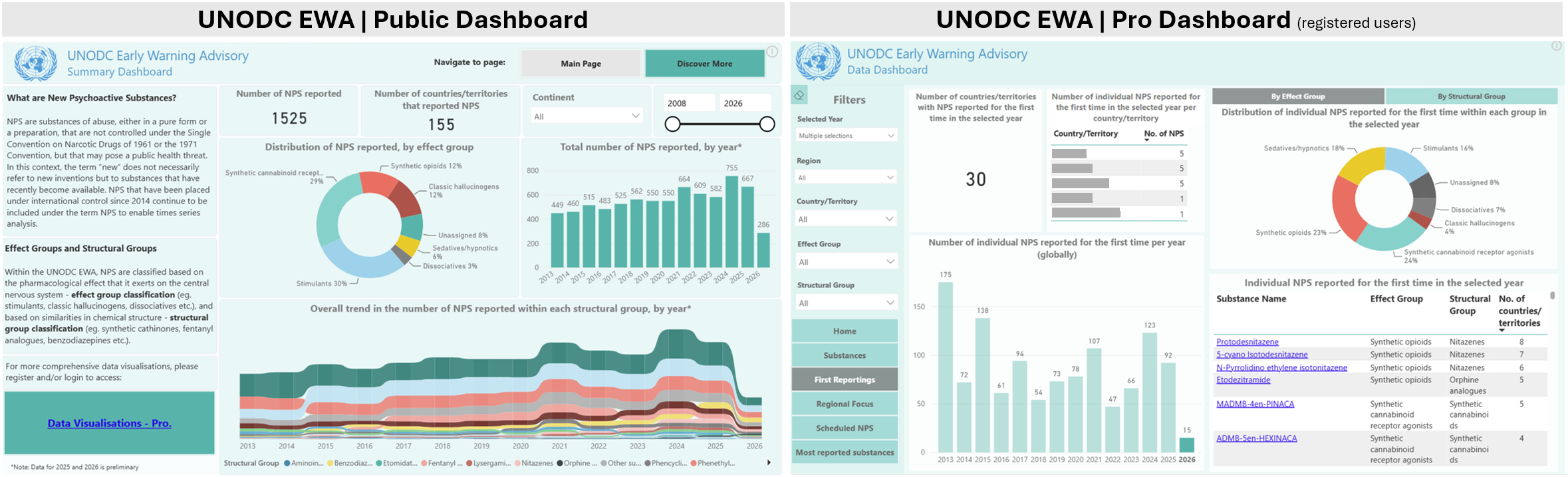 Registered users
 can access comprehensive interactive visualisations covering reported substances, emerging regional and global trends, prevalence data, pharmacological information as well as analytical and toxicological information, where available, through the EWA
Pro Dashboard and the
Tox-Portal Dashboard. In addition, the UNODC forensic early warning system regularly publishes
advisories highlighting emerging developments in NPS markets.
The forthcoming
UNODC Current NPS Threats Report, expected later this year, will provide a more comprehensive assessment of 2025/6 findings and emerging developments worldwide. In the meantime, drug analysis laboratories, domestic and regional early warning systems and national authorities are encouraged to make use of the UNODC EWA regional analysis tools to prioritise responses to substances posing the greatest threat.
Supporting evidence-based responses The average lifespan of an NPS in a national drug market is on average less than two years. The UNODC global forensic early warning system provides real-time insights into emergence, persistence, prevalence and harmfulness of NPS worldwide. The information reported contributes to the identification of substances that pose the greatest threat to public health and safety by helping to distinguish those that are transient from those that become widely established across markets and regions. By facilitating the rapid exchange of information, UNODC EWA supports evidence-based public health, forensic and policy responses to emerging drug threats.